Notice code Letter 1058
You got Letter 1058. You have 30 days to ask for a hearing.
You are holding Letter 1058, the final IRS warning before it seizes your property.
After 30 days from the date on the letter, the IRS can take money from your bank or paycheck.
Call now, and a licensed tax professional can request the hearing or a release before then.
Briefing for Letter 1058
IRS pageThe IRS final notice of intent to levy, with your hearing rights.
Example30 days from a letter dated October 6, 2026 is November 5, 2026.
- Pay the full balance to stop more interest.
- Apply online for a payment plan if you owe under $50,000.
- Request a hearing on Form 12153 before day 30.
Which numbers matter?
30 days
The hearing window is short, and the last day is printed on the letter.
Find that date on Letter 1058 and mark it on your calendar today.
Form 12153
This form is how you ask for a Collection Due Process hearing.
Fill it out and send it before your 30 days end.
$50,000
Owing less than this lets you apply for a plan with the IRS online tool.
Check your balance and apply online if you fall under that amount.
Stop a levy after Letter 1058
Letter 1058 gives you 30 days to ask for a hearing, and the last day is printed on the letter.
Then your wages and bank funds are open to levy, so a licensed tax professional can request the hearing or a release.
Call now and have your Letter 1058 read before the hearing window closes.
Call 855-964-5291What happens when you call
- You call during business hours and say you have an Letter 1058.
- A licensed tax professional asks for the date, the amount and the tax years on the letter.
- You hear your options for this notice and decide what to do. Nothing is filed without your yes.
A licensed tax professional answers, not the IRS. The call costs nothing, and you give up nothing by calling. IRS Code Lookup is a private tax help service.
Would you rather send your Letter 1058 details?
The date you received Letter 1058 sets your hearing deadline, so share it with the tax years listed.
With those details, a licensed tax professional can check the balance and your hearing options.
What changed recently?
On June 12, 2025, the Supreme Court ruled in Commissioner v. Zuch. Once the IRS is no longer pursuing the levy, for example after the balance is paid, the Tax Court cannot review your hearing case. So paying the balance in full also ends any Tax Court review of your hearing.
Source: Commissioner v. Zuch, U.S. Supreme Court (June 12, 2025).
What is the IRS saying?
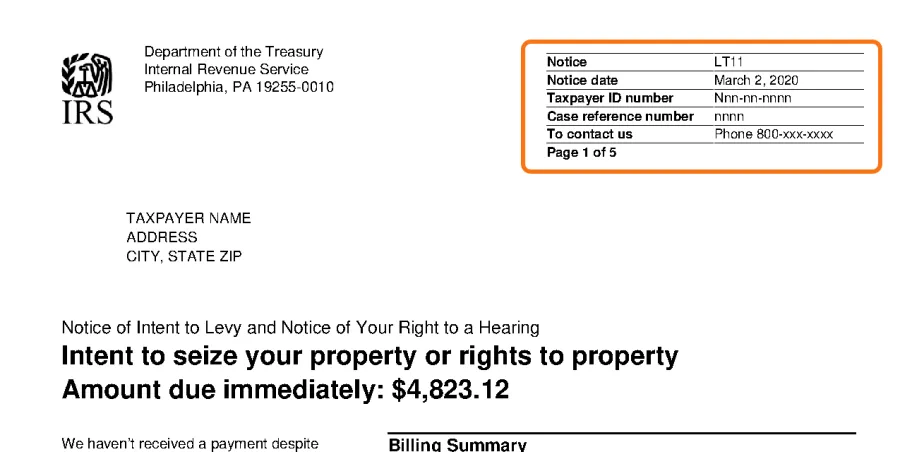
The IRS has not received payment for overdue taxes. It asks you to contact it immediately. This is the letter the law requires before most levies.
Why did you get it?
The IRS sent bills for this balance, such as a CP14, CP501, CP503 or CP504, and none was paid. The LT11 or Letter 1058 is the last letter before a levy.
Is it real?
A real LT11 or 1058 includes hearing instructions and Form 12153. It comes by mail, often certified. If you doubt it, call the IRS at 800-829-1040, not a number only the letter gives you.
Still unsure? Search the code on the IRS notice search, or use the real or fake checklist.
When is your deadline?
You have 30 days to request a Collection Due Process hearing on Form 12153, and the LT11 prints the last day. Use that printed date.
What if you agree?
Pay in full to stop more interest and penalties. If you owe $50,000 or less, the IRS says you can apply for an installment agreement with its online payment agreement tool.
What if you don't agree?
Request the hearing on Form 12153 by following the letter. If you already paid, send proof to the address at the top of the letter.
What happens if you ignore it?
The IRS can levy wages and bank accounts up to the amount owed and file a lien. Property it can take includes your car, your home, state tax refunds and Social Security benefits.
What should you read next?
Questions people ask
How long do I have after an LT11?
You have 30 days to request a Collection Due Process hearing. The letter prints the last day, so use that date.
What can the IRS levy after Letter 1058?
Wages and other income, bank accounts, business and personal assets including a car and home, state tax refunds and Social Security benefits.
Is LT11 the same as Letter 1058?
Yes, for you they work the same. Both are final notices of intent to levy, and both give you 30 days to ask for a hearing.
Can a payment plan stop an LT11 levy?
A pending payment plan request stops most levies while the IRS reviews it. The IRS must release a levy once you pay. Request the plan or mail Form 12153 before the printed date.
Sources
- Understanding your LT11 notice or letter 1058. Published by irs.gov.
- Collection due process (CDP) FAQs. Published by irs.gov.
- Commissioner v. Zuch, U.S. Supreme Court (June 12, 2025). Published by supremecourt.gov.
Last checked October 2026
What to do now
- Find the hearing deadline printed on Letter 1058 and mark it on your calendar.
- Compare the tax years and balance on the letter with your own records.
- Send Form 12153 before day 30 if you want a hearing.
- Call the number printed on the letter, never one from an email or text.
Call now and have your Letter 1058 read before the hearing window closes.
A licensed tax professional answers, not the IRS. The call costs nothing, and you give up nothing by calling. IRS Code Lookup is a private tax help service.